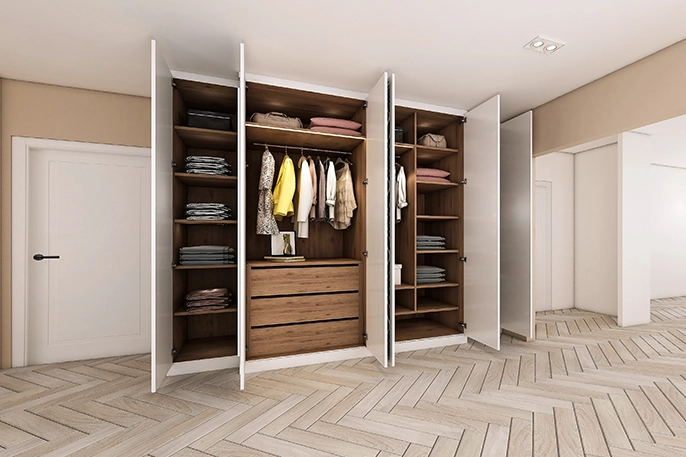
Tips to Customize Your Modular Wardrobe Interiors
A modular wardrobe is more than just a place to store clothes—it’s an extension of your lifestyle, routines, and personal style. While the exterior design and finish make a visual statement, it’s the interior layout that truly determines how functional and satisfying your wardrobe experience will be.
Customizing your modular wardrobe interiors can save time, reduce clutter, and maximize storage, especially in Indian homes where we store everything from ethnic wear to winter blankets in the same space.
Whether you’re designing a wardrobe for your master bedroom, kids’ room, or guest bedroom, this guide will walk you through practical, stylish, and space-smart tips to customize your modular wardrobe interiors.
1. Assess Your Lifestyle and Storage Needs First
Before diving into drawers and hanging rods, take a moment to understand what you’ll be storing. Everyone’s wardrobe needs are different.
Ask yourself:
- Do you have more western wear (foldable) or Indian wear (needs hanging space)?
- Do you need space for bags, shoes, or accessories?
- Do you prefer open shelves or closed drawers for undergarments and socks?
- Will you store bed linens, extra towels, or suitcases?
Tip: Make a list of categories and roughly how much space each needs—this becomes your blueprint.
2. Include a Mix of Hanging and Folding Sections
A good wardrobe offers a balanced mix of hanging space and shelves. This flexibility ensures that all kinds of clothing—from sarees and kurtas to jeans and tees—are stored optimally.
Hanging sections:
- Long-hanging (40–50 inches height): Sarees, gowns, long kurtas.
- Short-hanging (25–30 inches height): Shirts, tops, pants, blouses.
Folding shelves:
- Store t-shirts, denims, nightwear, workout clothes, and sweaters.
Tip: Adjustable shelves allow you to tweak the layout as your wardrobe changes seasonally.
3. Add Dedicated Drawers for Accessories and Intimates
One of the biggest clutter zones in any wardrobe? Small items like undergarments, belts, ties, watches, and jewelry.
Drawer ideas:
- Shallow soft-close drawers with dividers for undergarments, socks, and ties.
- Velvet-lined accessory trays for jewelry and watches.
- Hidden drawers inside shutters for valuables.
Tip: Opt for transparent tops or pull-out trays so you can see everything at a glance without rummaging.
4. Use Pull-Out Trouser Racks and Saree Organizers
Wardrobe accessories can elevate your modular wardrobe to a whole new level of ease.
Smart add-ons:
- Pull-out trouser racks: Keep pants wrinkle-free and easy to access.
- Pull-out saree racks: Store sarees flat without piling.
- Scarf and belt hangers: Tangle-free storage for daily accessories.
Tip: Choose high-quality channels for pull-out accessories—they handle weight better and last longer.
5. Plan for Shoe Storage If You Don’t Have a Shoe Rack
If you don’t have a dedicated shoe cabinet, your wardrobe can double up as a shoe storage unit—especially in the master or guest bedroom.
Options:
- Pull out the shoe trays at the bottom of the wardrobe.
- Open vertical shelves for heels and flats.
- Closed drawer bins for less-used or seasonal footwear.
Tip: Use moisture absorbers and liners in enclosed shoe spaces to keep them odor-free.
6. Don’t Forget Overhead Loft Space
Lofts are essential in Indian homes, especially for storing suitcases, seasonal clothes, winter quilts, or extra blankets. These can be above the wardrobe or designed as a separate unit.
Best practices:
- Use hinged shutters for lofts.
- Store only non-daily-use items.
- Label or organize with baskets or boxes.
Tip: If your ceilings are high, lofts can be built up to the full 9 feet height for maximum utility.
7. Choose the Right Shutter Type Based on Room Space
The kind of shutter you choose—sliding or swinging—will impact how you access the interiors and customize them.
Sliding shutters:
- Great for compact rooms where space is limited.
- Slightly restricts visibility since only one side opens at a time.
Hinged shutters:
- Allow full access to interiors.
- Works well in larger rooms or wardrobes less than 7 feet wide.
Tip: Use mirror shutters on sliding wardrobes to save wall space and add functionality.
8. Include Internal Lighting for Visibility
Ever fumbled in a dark wardrobe trying to find that one black kurta? Internal LED lighting strips inside wardrobes make a huge difference, especially in deep or lofted units.
Options:
- Sensor-based lights that turn on when the shutter opens.
- Warm white strip lights under each shelf.
- Battery-powered lights for retrofitting.
Tip: Choose motion sensor lights for convenience and energy saving.
9. Use Baskets, Dividers, and Organizers to Stay Clutter-Free
Even the best-designed wardrobe gets messy if you don’t maintain it. Storage accessories can help you categorize and tidy up effortlessly.
Must-haves:
- Foldable fabric baskets for seasonal clothes.
- Drawer dividers for undergarments and socks.
- Transparent boxes for accessories or makeup.
Tip: Label baskets if you’re storing different categories—it makes finding things faster.
10. Think Ahead—Design for Future Needs Too
If you’re investing in a modular wardrobe, make sure it evolves with your lifestyle.
Consider:
- Extra drawers or shelves can be added later.
- Empty sections for expanding wardrobe collections.
- Adjustable hardware or DIY storage inserts.
Tip: Don’t overcrowd initially. Leave 10–15% space for future additions or lifestyle changes.
Final Thoughts
Customizing your modular wardrobe interiors is not just about maximizing storage—it’s about creating a system that works for your daily life. From morning routines to seasonal organization, a well-planned wardrobe adds calm and efficiency to your day.
Invest time in visualizing your clothing habits, choose quality accessories, and stay clutter-conscious. Whether it’s a walk-in wardrobe or a compact sliding unit, a smartly customized interior can elevate your entire home experience.

Harish Yadav is the founder of Interio Group App. It is an Home-Interiors Marketplace where customers can hire Interior businesses and designers directly. Customers can get quotes for their interior needs.