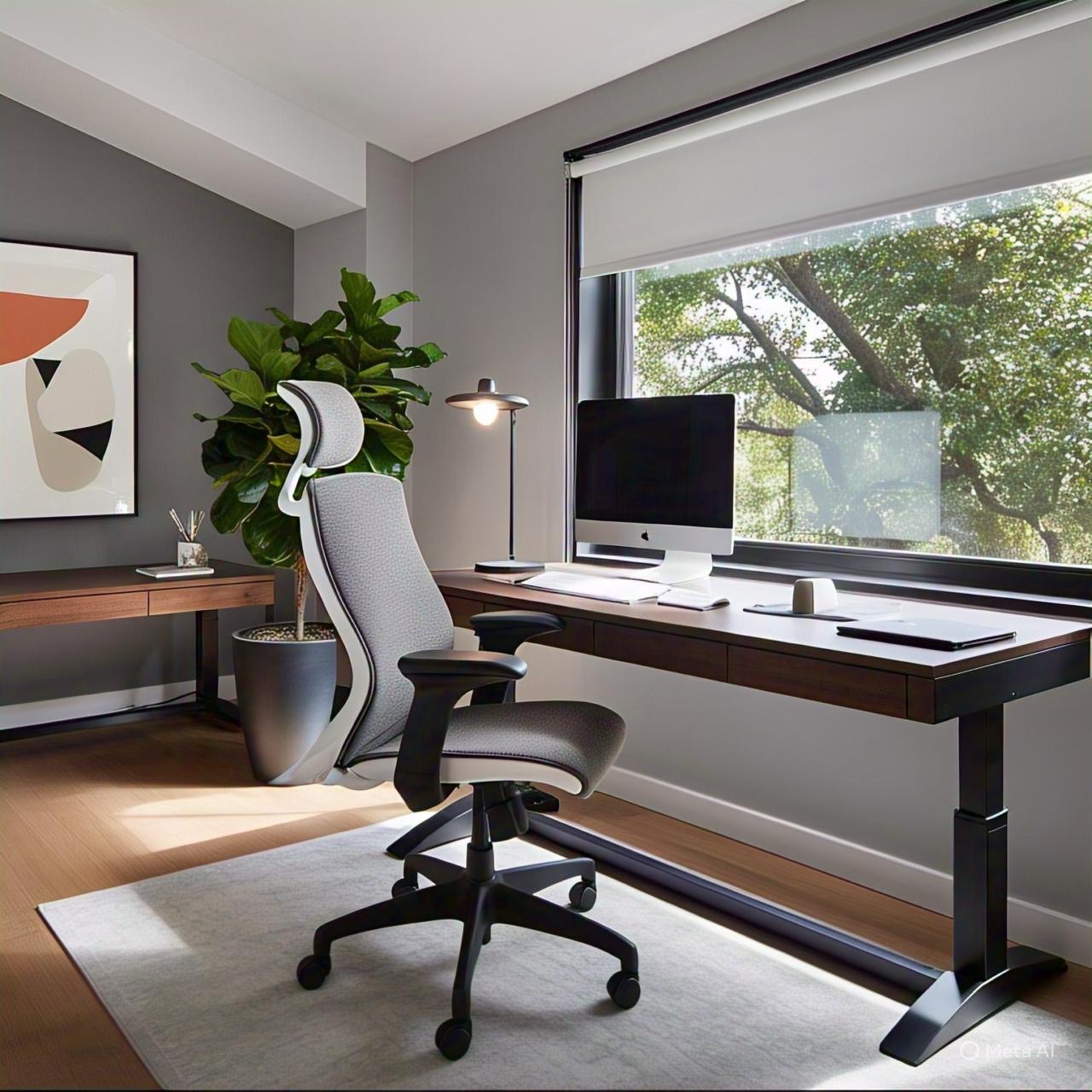
5 Tips to Design a Productive Study Room at Home
In a world that’s rapidly embracing hybrid work, remote learning, and upskilling, a productive study room at home is no longer a luxury—it’s a necessity. Whether you’re a student, professional, or a parent planning for your child, the right study room design can significantly impact focus, creativity, and overall productivity.
In 2025, designing a study space means blending ergonomics, technology, and wellness to create an environment that supports deep work without distractions. Let’s explore 5 essential interior tips to build a highly functional and inspiring home study space.
1. Prioritize Natural Light and Balanced Lighting
Lighting is a major player in determining how alert and focused you stay throughout the day. Natural light boosts serotonin, reduces eye strain, and enhances mood, making it perfect for long study or work sessions.
Study Room Lighting Tips:
- Place your desk near a window to get ample daylight.
- Use LED desk lamps with color temperature control (3000K–5000K) to adjust light based on time and activity.
- Avoid harsh overhead lighting—opt for layered lighting with ceiling lights + focused task lighting.
💡 Smart Tip: Choose smart lights with voice or app control, so you can dim or change tones based on the task (reading, writing, Zoom meetings).
2. Choose Ergonomic and Modular Furniture
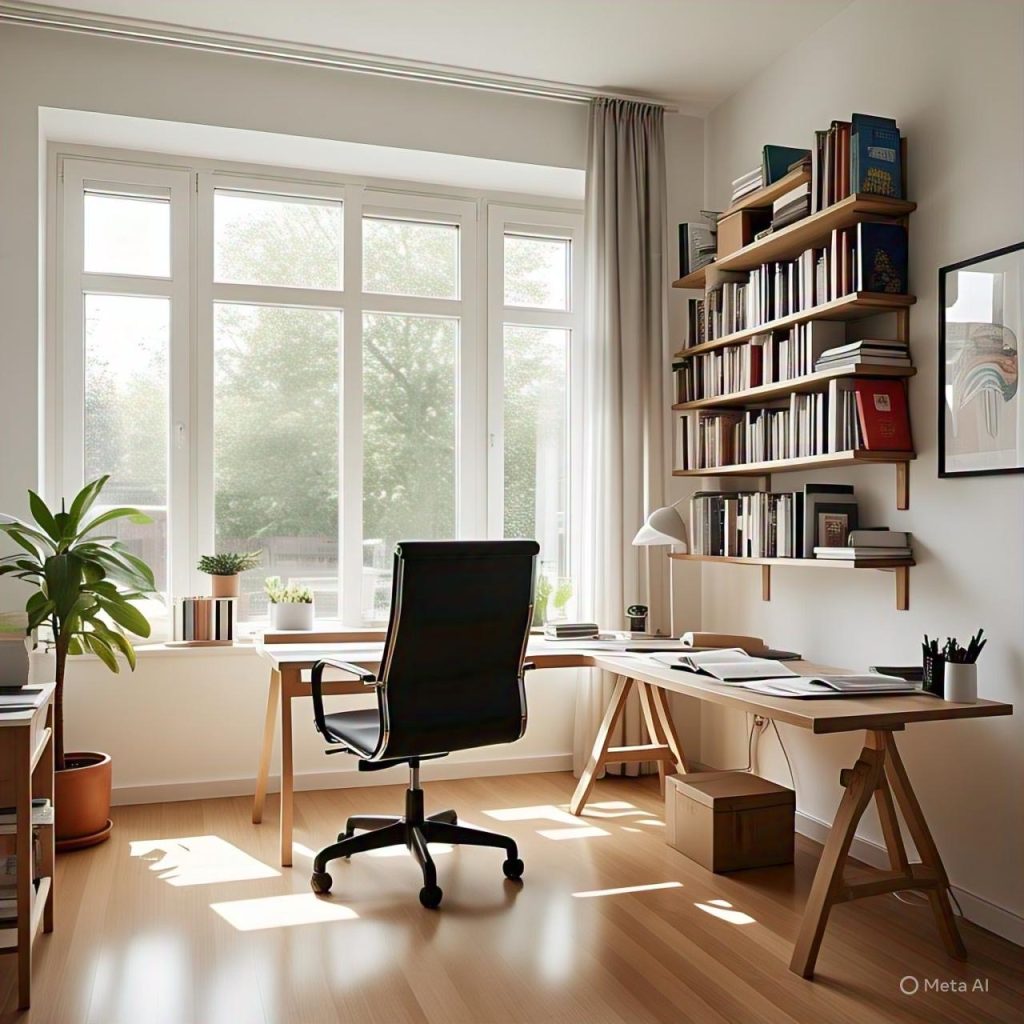
Comfort is non-negotiable when it comes to productivity. A poorly designed chair or a desk at the wrong height can lead to fatigue, back pain, and lower focus.
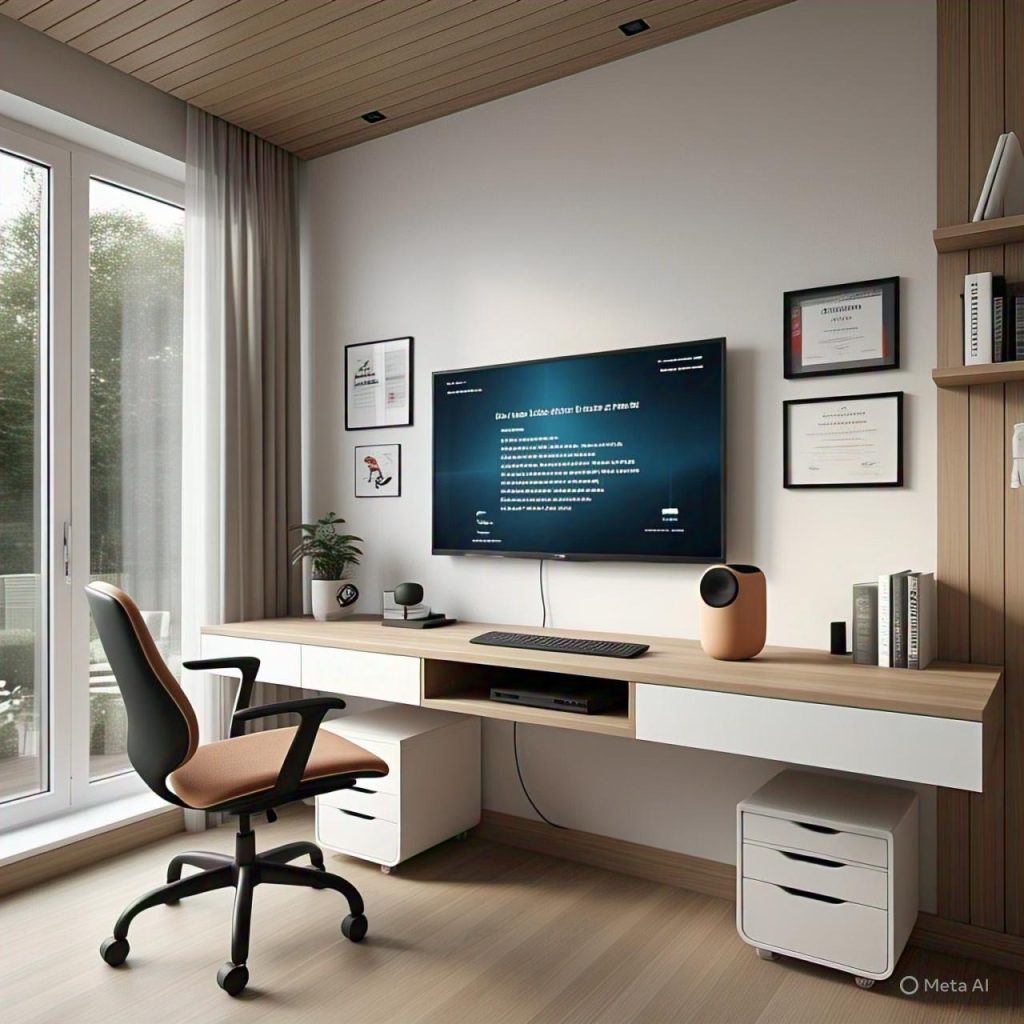
Essential Furniture for a Productive Study Room:
- Height-adjustable desk: Especially useful for switching between sitting and standing.
- Ergonomic chair: Look for lumbar support, adjustable arms, and breathable materials.
- Wall-mounted shelves or vertical storage: Keeps the desk clutter-free while optimizing space.
💡 2025 Trend: Modular furniture with cable management systems and in-built charging ports is gaining popularity for clean, tech-friendly setups.
3. Use Calming and Focus-Enhancing Color Schemes
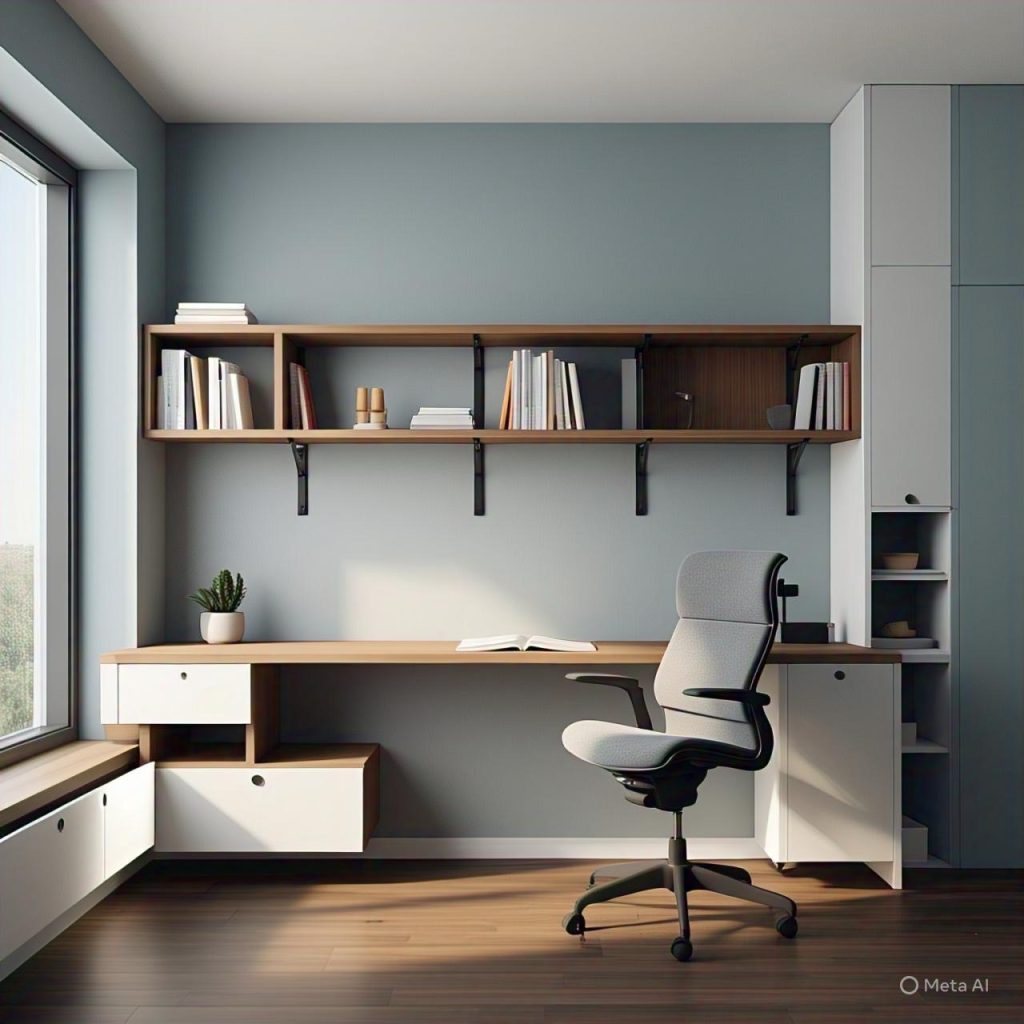
Colors subtly influence our mindset. The right palette can help create a peaceful atmosphere that encourages concentration without overstimulation.
Focus-Friendly Color Options:
- Light blues and greens: Known to reduce anxiety and improve concentration.
- Soft greys and beiges: Neutral backgrounds that don’t distract.
- Accent colors: Use mustard yellow, terracotta, or olive green sparingly to add energy.
🚫 Avoid bright red, orange, or high-saturation tones—they can feel agitating over long periods.
💡 Pro Tip: Paint one accent wall in a calming color and keep the rest neutral to balance stimulation and serenity.
4. Integrate Technology Seamlessly
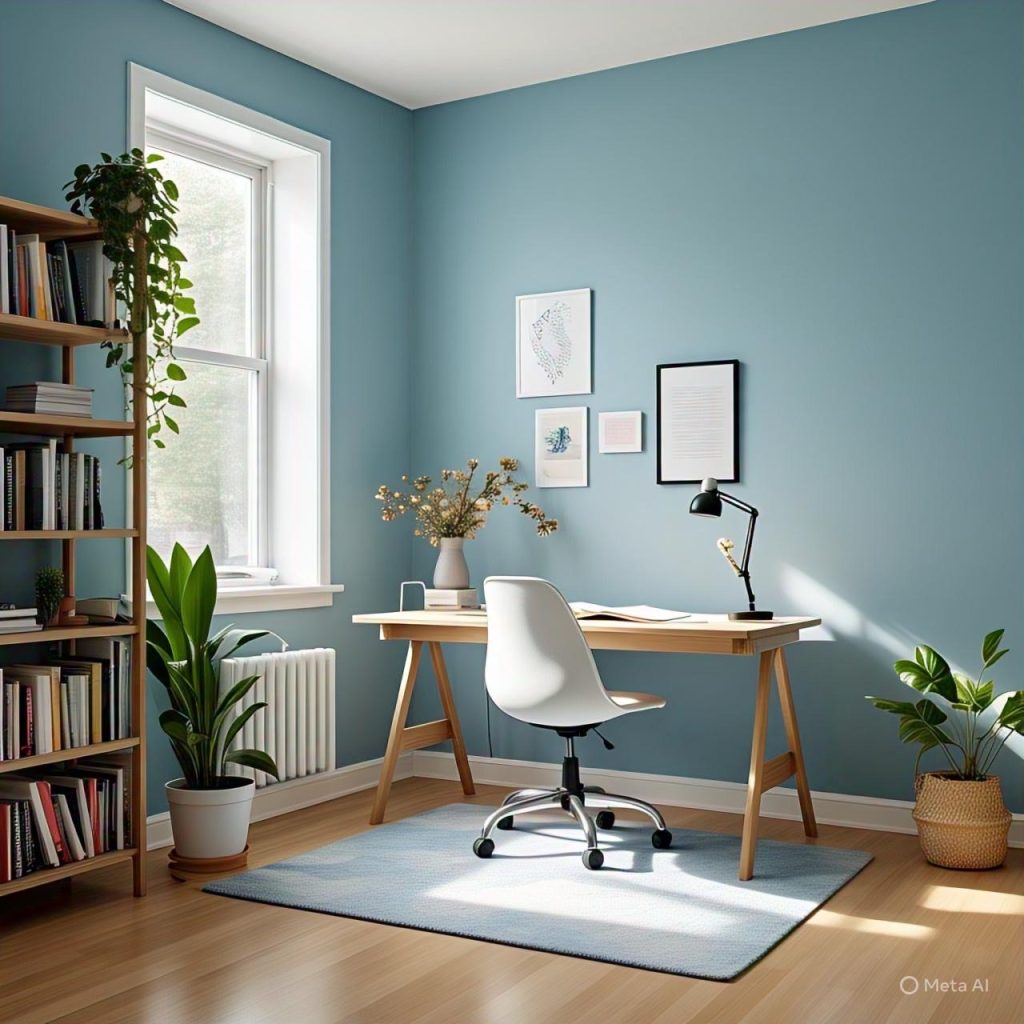
A 2025-ready study room must be equipped to support online learning, virtual meetings, digital planning, and multiple devices, all without messy wires or digital fatigue.
Must-Have Tech Features:
- High-speed Wi-Fi access point: Especially if the room is far from the main router.
- Monitor stands or laptop risers: To maintain eye-level screens.
- Noise-cancelling headphones and a ring light (for virtual meetings).
- Built-in charging docks, smart assistants (like Alexa/Google), and hidden wire trays.
💡 Smart Tip: Use voice-activated reminders and timers to stay on track during study sessions and breaks.
5. Reduce Visual and Audio Distractions
A productive study room is quiet, organized, and mentally clear. Cluttered desks, loud surroundings, or even too many decorative elements can derail your focus.
How to Minimize Distractions:
- Add acoustic panels, thick curtains, or rugs to soften external noise.
- Use closed cabinets instead of open shelving to hide visual clutter.
- Create a dedicated “tech-free” corner with books and notepads to disconnect when needed.
- Place your desk facing away from the bed or entertainment areas to avoid temptation.
💡 Design Trick: Use a partition or bookshelf as a divider in shared rooms or 1 BHK flats to mentally separate the study zone.
Bonus Tip: Personalize Without Overcrowding
Productivity improves when you feel emotionally connected to your space, but personalization should be minimal and intentional.
Personalization Ideas:
- A small indoor plant (like a ZZ plant or money plant) for freshness
- A vision board or calendar to track goals
- A framed quote or artwork that inspires focus
- Subtle décor in natural textures like wood, linen, or cork
🚫 Avoid turning your study desk into a display area. Keep décor limited to 2–3 elements per surface.
Final Thoughts
As homes continue to double as classrooms and offices in 2025, your study room deserves as much design thought as your living room or kitchen. By combining ergonomics, smart technology, minimalism, and the right color psychology, you can craft a space that maximizes focus and minimizes distractions.
Whether you’re creating a study room for kids, teens, or working adults, these 5 design tips will help you build a space that promotes deep work, better time management, and mental clarity—all from the comfort of your home.

Harish Yadav is the founder of Interio Group App. It is an Home-Interiors Marketplace where customers can hire Interior businesses and designers directly. Customers can get quotes for their interior needs.